


In 2003, a fast food chain hired researchers to understand why people bought milkshakes in the morning. They expected the answer to be something about demographics – young people, or people with a certain income, or a certain lifestyle. What they found was more interesting: people were buying milkshakes to make a long, boring commute more tolerable. The milkshake kept them occupied for forty minutes, fit in the cup holder, and did not drip on their work clothes.
The competing products were not other milkshakes. They were bananas (too fast), doughnuts (too messy), and bagels (too dry). The “job” the customer was hiring the milkshake to do was: make my commute more engaging without creating mess or guilt.
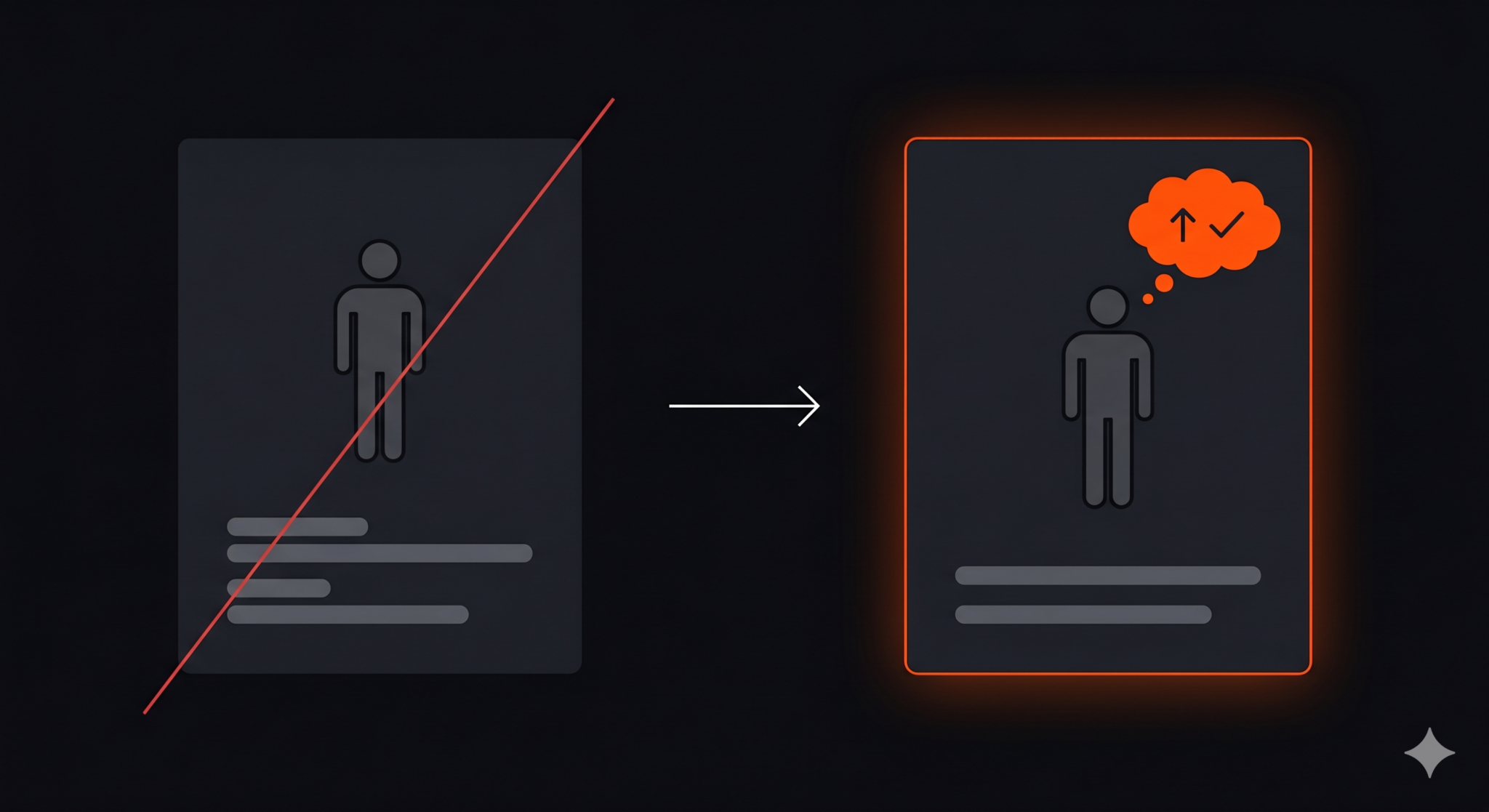
This is Jobs to Be Done in its simplest form: the idea, developed by Clayton Christensen and others, that customers do not buy products or services – they hire them to make progress in a specific situation. Understanding what job your customer is trying to get done, and how well your product does that job compared to alternatives, is one of the most powerful shifts available in marketing.
Why Demographics Are Not Enough
Most customer analysis starts with demographics: age, gender, income, location, job title. These are measurable and easy to segment. But they rarely explain why someone buys. Two people with identical demographics – same age, same income, same job title – can have completely different reasons for buying the same product. And two people with very different demographics can be hiring your product to do exactly the same job.
Marketing built on demographics answers the question “who are we selling to?” Marketing built on jobs to be done answers the more useful question: “what situation is our customer in, what progress are they trying to make, and what is stopping them?”
The Three Dimensions of Every Job
Jobs to Be Done theory distinguishes three dimensions of the job a customer is trying to get done.
The functional job
The practical task the customer needs to accomplish. For a business owner looking at a marketing platform, the functional job might be: I need to organise my marketing so that I know what to post and when, without spending hours every week figuring it out from scratch.
The emotional job
How the customer wants to feel as a result of accomplishing the functional job. Using the same example: I want to feel in control of my marketing rather than constantly behind, and I want to feel like a professional who has their act together rather than someone improvising.
The social job
How the customer wants to be perceived by others as a result of using your product. In the marketing platform example: I want colleagues, clients, and competitors to see that I run a professional, consistent marketing operation – not that I am winging it.
Effective marketing addresses all three dimensions. Most marketing only addresses the functional job. The businesses that connect most deeply with their customers are those that speak to the emotional and social jobs as well – the desire to feel capable, professional, and in control.
The Switch – Why Customers Change Solutions
One of the most useful insights from Jobs to Be Done research is understanding what causes customers to switch from one solution to another. The switch rarely happens because a new product is technically superior. It happens because the combination of push and pull forces reaches a tipping point.
Push forces are the frustrations with the current situation that make the customer willing to change: the current solution is too complicated, too expensive, too time-consuming, or simply not working well enough.
Pull forces are the attractions of the new solution: it promises to do the job better, faster, or more simply than the current approach.
Opposing these forces are anxieties (will this actually work? is it worth the effort of switching?) and habits (the current solution is comfortable and familiar, even if imperfect). The switch only happens when push plus pull exceeds anxiety plus habit.
For marketing, this framework is immediately actionable. Your messaging should acknowledge the push forces (naming the frustrations your customer feels with their current approach), articulate the pull (what your solution specifically does better), and reduce the anxieties (making it easy to try, reducing switching costs, providing evidence that it works).
How to Find Your Customer’s Job
The best source of Jobs to Be Done insight is direct conversation with customers – specifically, interviewing them about the circumstances that led to their purchase decision. Not “what do you like about our product?” but “walk me through the situation you were in before you decided to look for a solution like this.”
The questions that reveal the most useful insights:
- What were you using before, and what made you start looking for something different?
- When you first started thinking you needed a different solution, what was happening in your life or business?
- What alternatives did you consider, and why did you choose us instead of them?
- What would have to be true for you to stop using this and go back to what you were doing before?
- When you tell someone else about this, how do you describe what it does for you?
Even three to five of these interviews will reveal patterns that no amount of survey data can surface: the specific situations that trigger the need, the language customers use to describe the problem, the alternatives they seriously considered, and the exact moments that made them commit to switching.
Applying JTBD to Your Marketing
Rewrite your value proposition around the job
Most value propositions describe what a product is or does. A JTBD-informed value proposition describes what progress the customer will make. Compare these two versions for a marketing platform:
Feature-led: “An all-in-one marketing platform with strategy tools, brand guidelines, customer personas, and a content calendar.”
Job-led: “Finally know exactly what to post, why it matters, and who it is for – without starting from scratch every week.”
The second version speaks to the situation (starting from scratch every week), the functional job (knowing what to do), and the emotional job (finally having clarity). It is more specific, more resonant, and more likely to make the right customer feel seen.
Write content that addresses the trigger moments
JTBD research reveals the specific situations that push someone to start looking for a solution. These trigger moments are the most valuable inputs to your content strategy. If interviews reveal that the common trigger for adopting a marketing platform is “I realised I had been posting randomly for six months with nothing to show for it,” then content that speaks directly to that moment – the recognition that activity without strategy produces no results – will resonate deeply with people at exactly the point when they are ready to act.
Use the customer’s language, not yours
One of the most practical outputs of JTBD interviews is language. The exact words and phrases customers use to describe their problem are almost always more compelling in marketing copy than the words a company would naturally use. If customers describe their marketing situation as “I feel like I’m shouting into the void,” that phrase – not a cleaned-up version of it – belongs in your marketing. It is the signal that tells a similar customer: “this brand understands my exact situation.”
Identify and address the competing alternatives
JTBD reframes the competitive landscape. Your competition is not just other businesses offering similar services – it is everything your customer might hire to do the same job. For a project management tool, the competition includes spreadsheets, email threads, and sticky notes. For a marketing platform, the competition includes Google Docs, a content calendar spreadsheet, and doing nothing. Understanding what customers are currently hiring to do the job – and why those alternatives fall short – gives you much more specific and useful competitive positioning than comparing features with direct competitors.
JTBD and Your Customer Persona
Jobs to Be Done does not replace the customer persona – it deepens it. A persona describes who your customer is. JTBD describes what they are trying to accomplish and in what circumstances. Together, they provide a complete picture: a specific person in a specific situation with a specific struggle, looking for a specific kind of progress.
The most actionable version of this combination is what some practitioners call a “job story” – a structured statement that replaces the traditional “user story” format. Where a user story says “as a [type of person], I want [feature] so that [benefit],” a job story says: “When [situation], I want to [motivation], so I can [expected outcome].”
For a marketing platform, a job story might be: “When I sit down on Monday morning to plan the week’s marketing, I want to be able to see my entire content plan at a glance, so I can get into execution mode immediately rather than spending an hour figuring out what I am supposed to do.” This level of specificity – rooted in a real situation rather than a demographic profile – makes it immediately obvious how to write the marketing copy, what to emphasise in the product, and who will respond to it.
Getting Started With JTBD
You do not need a formal research programme to start applying Jobs to Be Done thinking. The minimum viable version is: have five conversations with recent customers, ask them to walk you through their decision to buy, listen for the situation they were in and the frustration that triggered the search, and note the exact language they use to describe the problem and the progress they were seeking.
From five conversations, you will have enough insight to rewrite your core value proposition, identify two or three content topics that speak directly to customer trigger moments, and understand what objections you need to address in your marketing to reduce switching anxiety.
JTBD and Target
Jobs to Be Done is the framework that makes your customer persona more than a demographic profile. When your persona is built around the job your customer is trying to get done – the situation, the frustration, the desired progress – every marketing decision becomes clearer: what to write about, how to position your offer, what language will resonate, and what objections to address.
Target’s customer persona module is built to capture not just who your customer is, but what they are trying to get done and what is standing in their way – so your marketing has the strategic depth that actually connects.
See the plans and get started today.
Related guides: Target marketing explained · What a target marketer does · How to choose a marketing platform