


How much should you spend on marketing? It is one of the most common questions small business owners ask – and one of the least satisfactorily answered. You will find rules of thumb ranging from five percent to twenty percent of revenue, conflicting advice from every direction, and almost no guidance that accounts for the actual situation of a small or early-stage business.
This guide gives you a practical framework for setting a marketing budget that makes sense for your specific business – based on your revenue, your goals, your stage of growth, and whether you are spending time or money (or both).
The Most Cited Rule – and Why It Is Only a Starting Point
The most common marketing budget guideline is seven to twelve percent of revenue. This comes from research across established businesses and is a reasonable benchmark for a business that already has a customer base and wants to maintain or grow it steadily.
But this rule has important limitations. It assumes your business is generating enough revenue that a percentage of it produces a meaningful budget. At €100,000 annual revenue, seven percent is €7,000 per year – or roughly €580 per month. That is workable but tight. At €30,000 revenue, the same calculation gives you €175 per month – barely enough to cover basic tools.
The percentage rule also does not account for your growth stage. A new business trying to establish itself in a market needs to spend proportionally more on marketing than an established business maintaining its position. Some growth-stage frameworks suggest fifteen to twenty percent for businesses in active growth mode.
A More Useful Framework: Three Budget Tiers
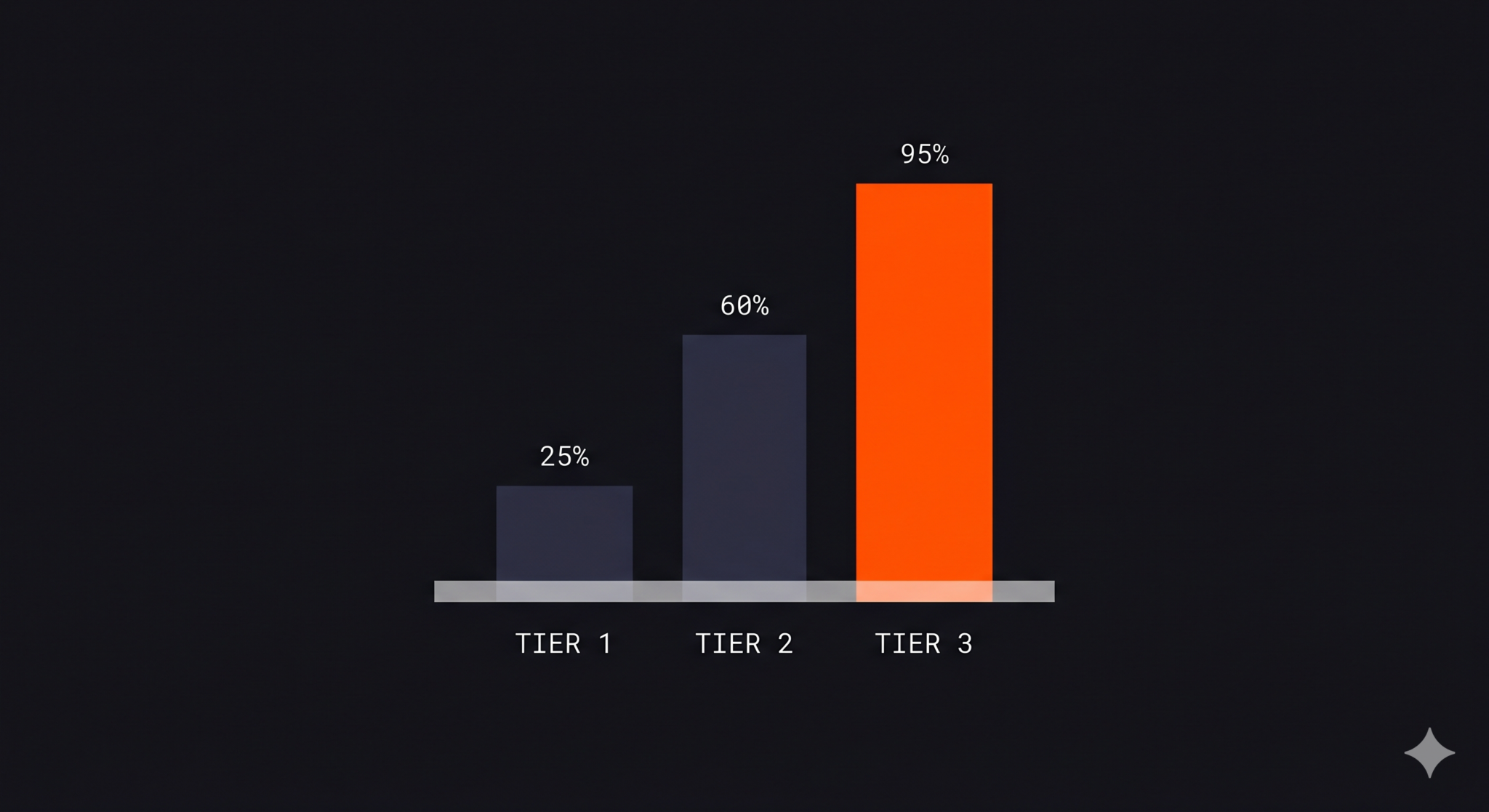
Rather than a single percentage, think about marketing budget in three practical tiers based on what you are actually able to invest.
Tier 1: Time-Only Budget (€0 cash per month)
Many early-stage businesses and bootstrapped solo operators cannot allocate meaningful cash to marketing. That is a real constraint – and it does not mean you cannot do marketing. It means your budget is time, not money.
At this tier, your marketing consists of: SEO-focused blog content (which costs time, not money, and accumulates as an asset), consistent social media presence on one or two channels, email list building using free tools (Mailchimp free tier, Brevo free tier), and Google Business Profile for local visibility. These activities require roughly five to eight hours per week to execute well.
Tier 2: Starter Budget (€100–400 per month)
At this level you can cover the essential paid tools and begin testing small amounts of paid promotion. A realistic allocation looks like this:
- Email platform (Mailchimp or Brevo paid): €15–30/month
- Design tool (Canva Pro): €13/month
- Social media scheduling (Buffer paid): €15/month
- Remaining budget for paid promotion: €50–300/month
At €100–150/month you are covering tools and keeping some budget for boosting your best organic content. At €300–400/month you can begin running small, targeted campaigns on LinkedIn or Facebook to grow your email list or promote a specific offer.
Tier 3: Growth Budget (€500–2,000+ per month)
At this level you can run meaningful paid campaigns with enough data to optimise them, consider investing in content production support (a freelance writer, a photographer, a video editor), and potentially begin working with a part-time marketing specialist. This is where marketing starts to compound quickly – but it requires a solid strategic foundation to produce returns. Money invested in paid ads without a clear strategy, a strong offer, and a converting landing page is largely wasted.
How to Split Your Marketing Budget
Once you know your total monthly budget, the next question is how to allocate it. A practical starting framework for a small business:
| Category | Allocation | What it covers |
|---|---|---|
| Tools and platforms | 20–30% | Email, scheduling, design, SEO plugins |
| Content creation | 20–30% | Freelancers, photography, video, copywriting |
| Paid promotion | 40–50% | Google Ads, LinkedIn Ads, Facebook/Instagram Ads |
| Testing and experimentation | 10% | New channels, new formats, small experiments |
This is a starting framework, not a fixed rule. If you are at Tier 1 (time only), your entire budget is in content creation. If you are investing heavily in paid growth, the paid promotion allocation might be sixty or seventy percent. Adjust based on what is actually working.
What a Marketing Budget Looks Like at Different Revenue Levels
To make this concrete, here is what a seven to ten percent marketing budget allocation looks like at different revenue levels for a Finnish small business:
| Annual revenue | 7% budget | Per month | Realistic tier |
|---|---|---|---|
| €30,000 | €2,100 | €175 | Tier 1–2: tools only + time |
| €80,000 | €5,600 | €467 | Tier 2: tools + small paid campaigns |
| €200,000 | €14,000 | €1,167 | Tier 3: meaningful paid growth |
| €500,000 | €35,000 | €2,917 | Tier 3: specialist + campaigns |
The Single Most Important Rule About Marketing Budget
Spend less than you think you need on tools, and more than you think you need on strategy.
The most common marketing budget mistake is not spending too little – it is spending without structure. A business that spends €2,000 per month on ads without a clear customer persona, a defined offer, and a converting landing page will consistently underperform a business spending €500 per month with a clear strategy and tight execution.
Before increasing your marketing budget, make sure you have the foundations in place: a defined target customer, a clear value proposition, a brand identity that is consistent, and a basic understanding of which channels you are focusing on and why.
How to Know If Your Marketing Budget Is Working
A marketing budget without measurement is guesswork. At minimum, track these three numbers monthly: your cost per lead (how much you spent to generate one enquiry or contact), your lead-to-customer conversion rate (what percentage of those enquiries become paying customers), and your customer acquisition cost (how much you spent in total to acquire one new customer).
Once you know your customer acquisition cost, you can compare it to your average customer lifetime value and make rational decisions about how much marketing investment is justified. If acquiring one customer costs €300 and that customer generates €2,000 in revenue over their lifetime, your marketing investment is clearly generating strong returns. If acquiring one customer costs €800 and generates €900, the math requires adjustment.
Marketing Budget and Target
Knowing how much to spend is only half the equation. The other half is making sure that every euro you spend is working from a clear strategic foundation – a defined customer, a consistent brand, a content plan that is connected to your goals.
Target is built to give small businesses that foundation – so whether your budget is five hours a week or five thousand euros a month, you are spending it on the right things, aimed at the right people, with a consistent message that builds over time.
Join the waitlist and build your marketing on a foundation that makes every euro count.
Related guides: Target marketing explained · What a target marketer does · How to choose a marketing platform